Cura através dos cavalos.
A terapia equestre é um tratamento baseado em evidências para autismo, TEPT, reabilitação física e regulação emocional. E é diferente de tudo o mais que oferecemos.
Entrar na lista de espera
O que é terapia equestre?
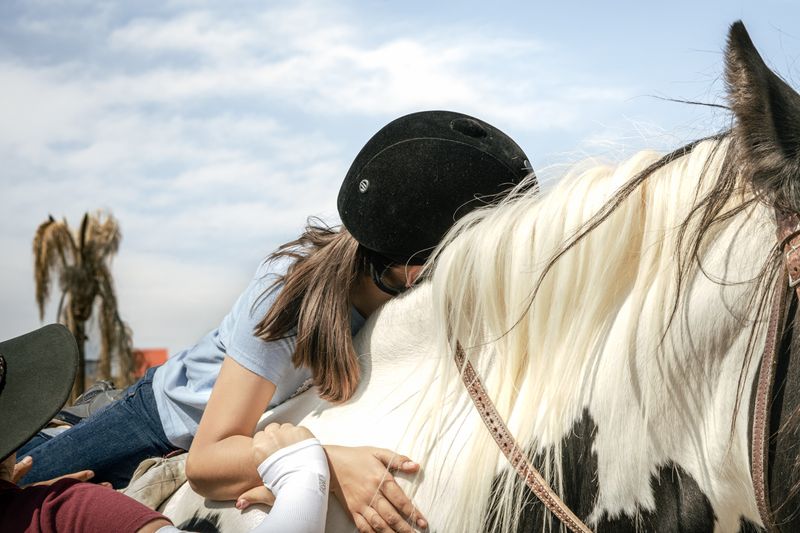
A terapia equestre usa o movimento, o ritmo e o relacionamento com cavalos como ferramentas terapêuticas. O movimento multidimensional do cavalo imita de perto o andar humano, estimulando grupos musculares, melhorando o equilíbrio e reduzindo a espasticidade. Além do físico, o vínculo entre o participante e o cavalo constrói confiança, regulação emocional e habilidades sociais de formas que a terapia tradicional raramente iguala.
Para quem funciona
Forte evidência existe para: Transtorno do Espectro Autista (engajamento social, processamento sensorial, comunicação), TEPT e trauma (regulação do sistema nervoso, confiança), reabilitação física (recuperação de AVC, paralisia cerebral, lesão medular) e regulação emocional (ansiedade, depressão, desafios comportamentais). Cada sessão é adaptada ao indivíduo. Nenhuma experiência com cavalos é necessária.
Como funciona
Cada participante passa por três fases projetadas para construir confiança, estabelecer um relacionamento terapêutico com o cavalo e entregar resultados mensuráveis.
Fase 1: Avaliação e introdução
- •Consulta inicial com o participante e a família
- •Definição de objetivos alinhados ao plano NDIS
- •Introdução ao cavalo e às instalações em ritmo calmo
- •Orientações de segurança e consentimento
Fase 2: Sessões de terapia ativa
- •Sessões individuais ou em pequenos grupos semanais
- •Atividades montadas e desmontadas adaptadas aos objetivos
- •Acompanhamento de progresso conforme medidas NDIS
- •Envolvimento da família e recomendações de estratégias em casa
Fase 3: Revisão e transição
- •Revisão formal de progresso com o participante e família
- •Definição atualizada de objetivos para a próxima fase
- •Plano de transição (continuação, formatura ou encaminhamento)
- •Relatório preparado para revisão do plano NDIS
Duas histórias de cura
Cada cavalo nas nossas instalações foi resgatado. A maioria veio de situações difíceis: negligência, ferimentos ou incerteza. Por meio de reabilitação paciente, eles se tornaram parceiros terapêuticos. Essa paralela não é acidental. Nossos participantes e nossos cavalos estão na mesma jornada: reconstruir confiança, recuperar função e encontrar uma vida que pareça completa novamente.
O que as famílias dizem sobre a terapia equestre
"Após seis meses de terapia equestre, meu filho fez contato visual pela primeira vez. As palavras não dão conta de descrever."
Priya Sharma
Mãe, Gold Coast
"Era cético. Não sou uma pessoa de cavalos. Mas algo nas sessões simplesmente funcionou. Minha ansiedade é gerenciável agora de um jeito que não era antes."
Roberto Díaz
Participante NDIS
A Terapia Equestre começa na Fase 2.
Entre na lista de espera e seja o primeiro a saber quando as reservas abrirem.
Entrar na lista de espera